

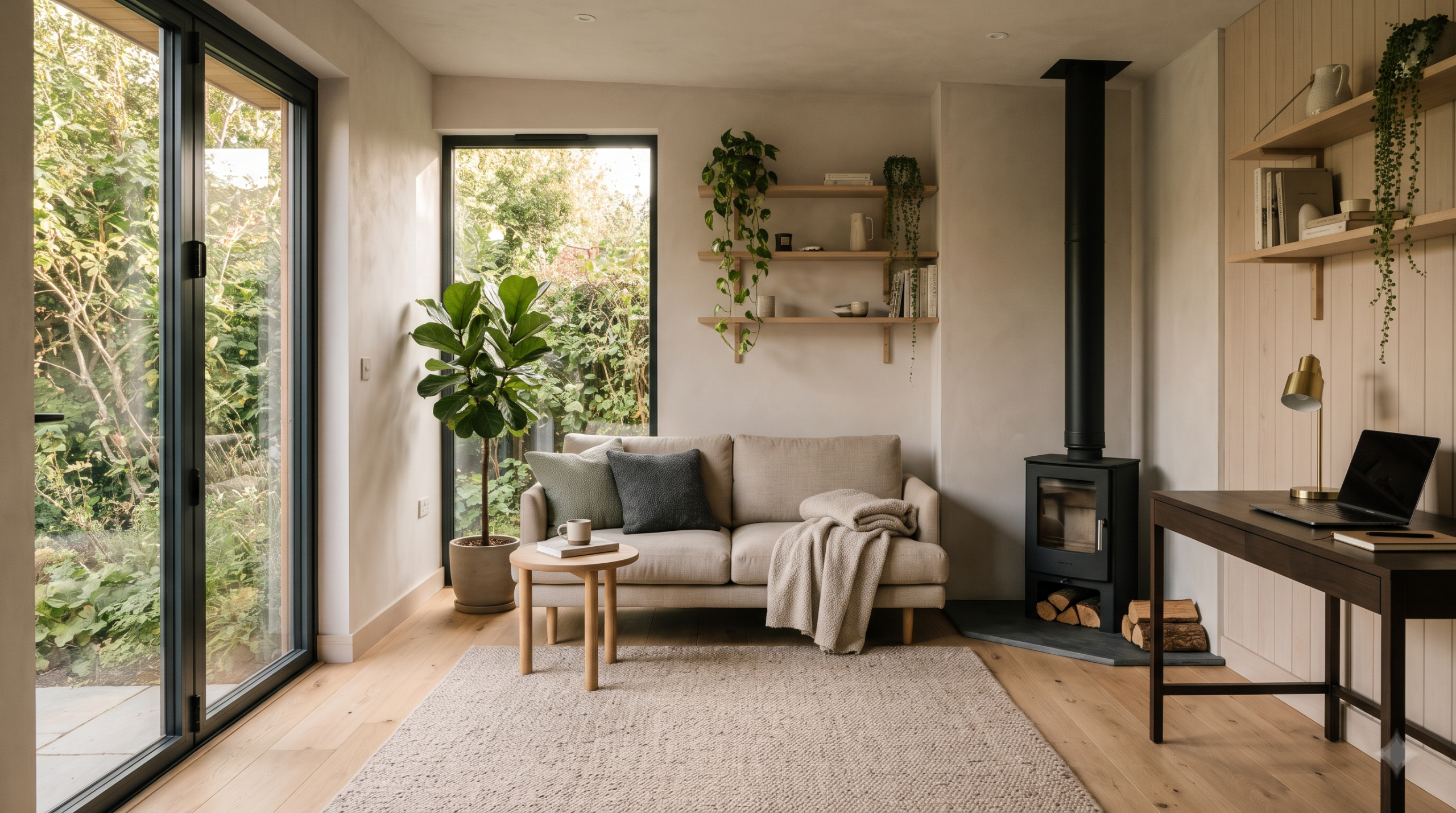
The house that felt like plenty of room a few years ago can start to feel tight surprisingly quickly. Perhaps someone now works from home, or a teenager needs somewhere to practise music. Moving is expensive and stressful, so most homeowners look at adding space instead. That leads to one question: extend the house, or put a building in the garden?
Both can work well. The right answer depends on what you need the extra room to do.
Start With What You Actually Need the Space For
Before comparing builders or budgets, think about how you will use the new room on a normal weekday:
- Does it need to connect directly to the kitchen or another part of the house?
- Will it need running water, a toilet or space for someone to sleep?
- Will you use it all year round, including on cold winter evenings?
A larger kitchen or an extra bedroom belongs in the house. A quiet place to work, paint, exercise or unwind often doesn’t need to be.
Garden Building vs Home Extension at a Glance
| Consideration | Garden Building | Home Extension |
|---|---|---|
| Connection to the house | Separate, reached through the garden | Part of the main home |
| Disruption | Mostly kept to the garden | Often affects rooms and services inside the house |
| Typical uses | Home office, studio, gym, hobby room | Kitchen, living space, bedroom, bathroom |
| Sleeping accommodation | Restricted under permitted development | Suitable once building regulations are met |
When a Garden Building Tends to Make More Sense
You Want Some Separation
A separate building creates a clearer line between work and home than a desk in the spare room, and keeps noisy hobbies or a home gym out of the house. If you are planning a workspace, these home office decor ideas are worth a look.
You Need to Keep Living Normally During the Work
Extensions usually mean opening up an external wall, with dust, noise and rooms out of use for a while. MyJobQuote estimates a typical extension takes between 10 and 18 weeks. A garden building is constructed away from the house, so daily life carries on as usual, though it is worth asking any supplier for a realistic timeline from order to finish.
When an Extension Is the Better Fit
If the aim is a bigger kitchen, open-plan living, a downstairs bathroom or an extra bedroom, an extension connects that space to everyday family life in a way a separate building can’t.
Sleeping space is a common sticking point. Under the Planning Portal rules, an outbuilding built under permitted development must not be self-contained living accommodation, so a guest bedroom or annexe usually means an extension or a full planning application. If you are unsure whether major building work is right for you at all, this guide on whether renovating is worth it covers the wider picture.
What to Check Before You Commit
Planning. Both options can often go ahead without a full application, within set limits. Single-storey rear extensions generally can’t extend more than four metres beyond the original rear wall of a detached house, or three metres for other houses, without prior approval. The extensions guidance sets out the full conditions, and listed buildings and conservation areas have extra restrictions.
Building regulations and neighbours. Most extensions need building regulations approval. Garden buildings generally don’t if they are under 15 square metres with no sleeping accommodation, according to the Planning Portal’s FAQ. If an extension involves a shared wall, the government’s Party Wall guidance explains when to notify neighbours. For garden buildings, specialist firms such as Surrey Hills Garden Buildings can talk through sizes and siting for your plot.
Comfort. If you plan to use a garden building all year, ask what “fully insulated” means in practice, how it will be heated, and plan power and internet from the start with a registered electrician.
Costs. Prices vary with size, specification and location, so get several quotes rather than assuming either route will be cheaper. As a guide, Checkatrade puts the average single-storey extension at between £30,000 and £140,000. Check exactly what each quote covers, and build in a contingency; these tips for a smooth home renovation apply to either project.
Finding the Room You Need Without Outgrowing Your Home
Running out of space doesn’t have to mean running out of options. If the room needs to feel like part of the house, hold a bed or connect to the kitchen, an extension is usually the natural choice. If you want a quieter, separate space with less disruption, a garden building is well worth considering. Start with how the room will be used day to day, check the rules for your property and compare real quotes, so the space you add suits the way your household actually lives.

